Free Web Hosting Provider - Web Hosting - E-commerce - High Speed Internet - Free Web Page
Search the Web

Literary Den

Home Page About Page Whats New Photo Page Contact Page Favorite Links

Literary Den

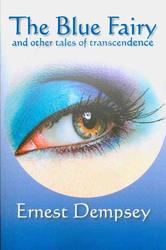
Writing befriended me early in my life, like light illuminating the way of a lonely traveler treading the path of experience. Starting as pleasure, it soon turned into solace, and now it has become an addiction. The word dread seems to mean a time when life will force me to part with my pen and paper (or my 200 million year old laptop). Since last year, I have reached out to the world through publications in form of books, essays, articles, reviews, and interviews. My books The Biting Age and Islands of Illusion are born in New York at the World Audience Inc. where I am a founding member and perhaps the next President (of World Audience, not the USA). The company is now pregnant with my coming book The Blue Fairy and Other Stories and of course more deliveries are to come in the coming days of the year. Watch out for the best Literary Dad of the year award!

Inside the Books

You will come across some people and things that together make sense to those of you who have come out a bit out of their senses. One thing you cannot claim with confidence is the validity of your judgment regarding these apparently senseless chaps. That is what makes them important. 

My Books and Other Titles at World Audience

World Audience Poetry Contest

Submit your poems before 15th August, 2007, to win $100. Click on the image below to access the poetry contest page.

Food for Thought: 'Hard Times' Dickens on Education

Charles Dickens will always be remembered as a great novelist, as a wonderful humorist, and an unsurpassed genius of the Victorian World. Dickens’ Hard Times is a novel that at once tickles to giggle and bites to ponder. The satire set in wit poises toward a serious questioning of many of our still existing attitudes. One of these is our blindfolded pursuit of so called ‘facts’-figures and statistics upon which we support our concepts of reality and evaluate our benefits and losses. Dickens’ character Cecilia Jupe (or Sissy), called girl number twenty by her teacher Mr. M’Choakumchild, is always regarded as a slow learner. In the eyes of her teacher and like gentlemen, she is a student who is always wrong. But the following instance from the novel defies the rooted ideas of facts through the girl’s own mind where facts are innocently and genuinely perceived. Sissy is telling Louisa about Mr. M’Choakumchild’s questions and her ‘wrong’ answers.       

Mr. M’Choakumchild: Now, this schoolroom is a Nation. And in this nation, there are fifty millions of money. Isn’t this a prosperous nation? Girl number twenty, isn’t this a prosperous nation, and a’n’t you in a thriving state?


Sissy:  Miss Louisa, I said I didn’t know. I thought I couldn’t know whether it was a prosperous nation or not, and whether I was in a thriving state or not, unless I knew who had got the money, and whether any of it was mine.  


Mr. M’Choakumchild: This schoolroom is an immense town, and in it there are a million of inhabitants, and only five and twenty are starved to death in the streets, in the course of a year. What is your remark on that proportion?

Sissy: And my remark was-for I couldn’t think of a better one-that I thought it must be just as hard upon those who were starved, whether the others were a million, or a million million. And that was wrong, too. 


Mr. M’Choakumchild: In a given time a hundred thousand persons went to sea on long voyages, and only five hundred of them were drowned or burnt to death. What is t e percentage?


Sissy (sobbing): And I said Miss, I said it was nothing. Nothing Miss-to the relations and friends of the people who were killed.

See more on Dickens at: http://www.fidnet.com/~dap1955/dickens/

On Truth and Reality

The late Lama Anagarika Govinda, the great Tibetan mystic, left an indelible impression on my thinking when I read his argument on the reality of Freedom and Necessity. Lama Govinda’s argument comes into play with the statement that as long as our usual habitual reactions (or responses) dominate us, we live essentially in the past. In moments of contemplation, the consciousness is freed, at least temporarily, from the burden of the past. This freedom is essentially subjective and individual. It cannot be objectively experiences by following disciplines of science and philosophy. A wonder Lama’s words induces!

Lama Govinda’s books include Foundations of Tibetan Mysticism, The Way of the White Clouds, Creative Meditation and Multi-Dimensional Consciousness.   


Links to a whole universe of knowledge relating science and philosophy is available at:


http://www.spaceandmotion.com/